The Characters of the Good. Aretomachy, or the Struggle of the Virtues
Is the good a monolith of virtues? Curiously enough, characterologies are usually grounded in vices or, if one prefers, in human sins: greed, sloth, pride, envy, and so on. Each of them can shape a character, a personality, a figure. Nor is the strong, frankly diabolical version excluded: a being so immoral as to embody all vices at once. Usually, however, moralists have something like a Hippocratic vision of evil, classifying their subjects according to the predominance of one vice or another, just as a temperament was once distinguished from the others by the greater presence of one or another of the humors. Some individuals are greedy—not because they are not also fearful or cowardly, envious or proud, but because the rest of their “qualities” recede into the background, eventually colored by the dominant trait. Thus the fear of a greedy man acquires comic or grotesque aspects when he has to overcome that fear in order to satisfy his appetites. From this negotiation, from this inner conflict, arise priceless comic scenes in which either greed is diminished by fear, or fear by greed, unless the two join together to produce an amusing or repellent hybrid. This moral variety, ensured by the combinatorics of negative traits, gives evil an impression of dynamism and, consequently, of vitality, in contrast with the good, which by comparison often seems dull, indifferent, lifeless, inert.
It has often been said that Dante’s Inferno is more successful than his Paradise precisely because of the extraordinary diversity of faces, forms, and individualities generated by the variety of inclinations that define the damned. Paradise, by contrast, seems monotonous, boring, dull, pale, and almost lifeless, since its blessed inhabitants are perfect, spherical, irreproachable, consummate. Frozen in beatific contemplation, forever protected from any deficiency—except that excellent one, the infinite aspiration toward the infinite Good—immortalized in perpetual ecstasy and leveled into eternal delight, castrati of divine hosannas, they are luminified, transformed into radiances and glimmers of varying intensity. They regain a particular form, a name, only through their fleeting contact with the intrusive narrator, and only because they remember their ties to earthly life—an opportunity for the divine Florentine to put into their mouths a few imprecations, rather inappropriate in context, against his own enemies. After this rapid individuation, the known spirit is reabsorbed into the spectacle of singing lights of the heaven in which it dwells, disappearing completely into its uniformizing harmony. One cannot help asking what Dante would have described had he known no one in Paradise. His tercets would have woven themselves into a metaphysics of light, of incomparable purity, but also of an altogether inhuman monotony.
The prejudice that a truly good person can be good only if he is good in every respect, if he possesses all the virtues equally and indistinctly, is one reason why an exemplary moral life appears so tasteless, so placid, so… stupid. The association between goodness and stupidity, even idiocy, is too familiar to require much insistence: it is enough to recall Christ’s celebrated blessing of the poor in spirit, Dostoevsky’s novel The Idiot, or the Romanian expression “so good he’s a fool.” No wonder that the absolutely virtuous person cuts the figure of a simpleton: deprived of drama, conflict, and inner tension, he resembles the mineral by his imperturbable calm and the vegetal by his constant repetitiveness. Compared with him, even a bacterium might pass for a character in a novel. In this logic, indeed, the absolute good and the void become almost synonymous; hence, in many cosmogonic myths, the good remains inactive until the intervention of a “negative,” demonic agent, a trickster who sets creation in motion. Besides, the same primordial vacuity seems to be what hermits, ascetics, and saints of all religions seek to restore, an aspiration that appears to confirm both the thesis of the universalism of the sacred and, above all, the Freudian theory according to which Nirvana is not merely the name of a particular religious ideal, but the very psychic principle of annihilation and self-annihilation.
Within the logic of this system of representations of the good, the absolute sterility of the absolute good is self-evident. “There is no good without evil,” we repeat ad nauseam. Indeed, in order to ek-sist, in order to come out of itself, the Good would have to suffer from a lack, a need, and therefore from an inner evil, which is a contradiction in terms. Thus, insofar as it remains absolute, the Good remains enclosed within itself, sufficient unto itself, as though in-existent. Those who stubbornly reject the Gnostic solution—the explanation of creation through the intervention of an “evil demiurge,” that is, all the “orthodox” philosophers from Plotinus to Augustine, from Pseudo-Dionysius and Boethius to Aquinas, from Anselm to Leibniz—remain bound to this oppressive paradox of the supreme Good: creation implies the presence of evil, of lack, need, absence, desire, insufficiency, deficit; yet the absolute Good suffers from no lack and therefore cannot create. For the Plotinian metaphor of the Good that cannot refrain from giving itself, from emanating just as the sun cannot refrain from shining—without pursuing any determinate goal, since the very pursuit of a goal would indicate a lack, a need, a “deficit of being”—remains insufficient, however ingenious it may be. The Plotinian Good is mechanical, for it is involuntary and non-intentional. It is “good” as water or food is “good,” as cooling shade or fertile earth is “good.” What kind of good is this? A metaphysical, trans-moral, impersonal good, entirely impassive toward its consequences, toward the poor souls that proceed from it. In Plotinus’ view, the entire moral effort falls precisely to them, to these souls who, for their own good, must cling to the “chain” descending from it, so as not to fall into the abyss of matter. As for the supreme Good, everything that happens beyond it is a matter of indifference: it may be or may not be. Moreover, it has no knowledge of what lies “beyond”; it remains wholly passive and impassive, apathetic and indifferent. At the upper end of the Plotinian chain of being, all that remains for us is to contemplate—by deduction!—the sealed identity of a One so tautological that nothing can be attributed to it, not even unity. Once again it is revealed to us that the absolute good is the absolute nothing, the pure void.
Christianity resolves the problem of the relation between the Good and creation in an imagistic, allegorical, metaphorical manner—even if it completely changes Plotinus’ perspective—the approach being this time personalist, since God creates the world out of love for the human beings whom He… will create. In this case, love precedes the act of creation; the Christian God resembles a Pygmalion who falls in love with Galatea before sculpting her. Since creation is ex nihilo, out of nothing, it follows that it is creation in the proper, absolute sense of the term; in other words, the creature is strange, utterly unprecedented even for its creator—which makes the motivation of creation by a prior love for the creature unreasonable. The problem of the motivation of creation in Christianity is rather uncomfortable for theologians, which is why it is usually avoided or hidden under the cliché of love for humankind. Nevertheless, the prepositional attribute “out of nothing” (ex nihilo) signifies, whether one wishes it or not, the self-sufficiency mentioned above. This is an important clarification, since for Plato love is born of lack: God creates the world without having any lack, any deficit, any need, anything that might determine Him to create. Creation is ex nihilo, that is, without any motivation—internal or external—as a purely gratuitous act, deprived of any reason. The abyss or non-ground of divine being is, in relation to creation, the abyss or non-ground of the good.
It would certainly be worth following the other solutions or images invoked by those who have tried to solve the problem of the relation between the absolute Good and creation; but since this is not the purpose of the present text, we shall leave such a survey for another study. Let us return, then, to the analysis of the logic present in the representation of the good as monolithic, uniform, compact, imperturbable.
We observe that, over time, from Antiquity to modernity, the species of the good have been conceived not only as compatible with one another, but also as indissoluble, the morally exemplary individual being the one who appropriates them all. Let us take the theological virtues: hope, faith, and love. The three Christian virtues are conceived according to a triadic and organic model; they cannot be separated from one another. An authentic Christian exercises them all in equal measure, not one without the other two, nor one against the others. Such an ideal human being—deprived of any inner tension—cannot set himself in motion; he needs a stimulus, a negative one, external to himself, that is, evil. (The good cannot exist without evil.) But a non-autonomous good, forced into existence by a “need,” and even more by the need for evil, is a true scandal. And it is precisely on this scandal of reason that Christianity will rely, painting in broad strokes the relation of dependence between good and evil: “love your enemy,” “I believe because it is absurd,” “I hope because it is impossible.” What would happen to these virtues if their “object,” that which constantly opposes them, did not exist: the enemy, the absurd, the impossible? They would remain shining like amnesiac spirits in Dante’s Paradise, forms as devoid of content as concepts without intuitions.
Are these virtues, then, truly incapable of setting themselves in motion on their own, outside the stimulation provided by what negates them? Do they become fertile only in contact with alterity? This would be so if we regarded the species of the good, that is, the virtues, as equivalent, homogeneous, devoid of tension and internal difference; or, what amounts to the same thing, if the Good were monolithic, undivided, absolutely unitary.
Yet the very fact that the entire moral tradition cannot conceive of the virtues—the species of the good—as being practiced separately from one another, that it understands them as the indissoluble “parts” of a unitary whole, may be an indication that each of the virtues or species of the good, isolated or dominant in relation to the others, can establish a genuine moral character, but also that, in certain cases, it can trigger polarizations and even conflicts with the other virtues. This explains why so many of those who consider themselves agents of the good, because they fight against evil, also fight among themselves, often invoking, in order to ease the feeling of a fratricidal war, the claim that they—and not the others—are the true representatives of the good. Quite often we see them contesting the legitimacy of values that are obviously moral—mercy, say, or love of humankind—simply because these are proclaimed by the opposing camp or camps, and in order to remain coherent in justifying their own exclusivity regarding the good.
Let us stop, by way of example, at the three theological virtues alone, in order to sketch the moral types that the predominance of a given virtue may produce. Let us suppose that hope (ἐλπίς — elpís) predominates in an individual, the other moral “humors” or virtues being present in a reduced proportion. We will then be able to speak of an elpidic character, a character inclined more toward hope (ἐλπίς — elpís) than toward faith (πίστις — pístis) and love (ἀγάπη — agápē).
An elpidic character is defined by openness toward the future, by a futurizing optimism—the future is the best of all possible worlds—by an infinite capacity for recovery. At the same time, such a character may be irritated by those who, through their own example, contradict his vision and affective disposition: the sick, those trapped in misery without a way out, the dying—in other words, those who need agápē rather than elpís. The conflict can sometimes become acute within him; and if agapic tendencies do come to the surface, the elpidic character will feel overwhelmed, disproportionately saddened, and will lament that he cannot bear to see the other’s suffering, that he is far too sensitive to endure the spectacle of life’s misery. Indeed, however much he might wish it, he cannot sustain a long-term effort of care. His gaze, fixed on distant horizons, cannot focus on the person next to him.
But let us leave these dramatic examples aside. Not even normal, healthy beings can hold his interest for very long. The elpidic is a patent Bovaryan. Madame Bovary, because of her elpidic character, cannot love anything in a durable way. Since the horizon recedes as one advances toward it, whatever at a given moment appears to lie on the same line with it is destined to be left behind by the elpidic, since his focal point is not what lies at the horizon, but the horizon itself. Of course, a psychology of ages would be tempted to attribute the elpidic character to youth, but such a reduction would greatly distort things. An elpidic character preserves his dominant traits even in articulo mortis, just as we encounter agapic or pistic children and adolescents. With respect to faith, the elpidic is divided. For although hope and faith may seem able to coexist happily, faith implies a certain fixity and rigor that the elpidic viscerally rejects. Faith imposes doctrines and builds churches; it establishes repetitive behaviors, a certain routine, in short, a certain settledness that does not suit our eminently nomadic elpidic.
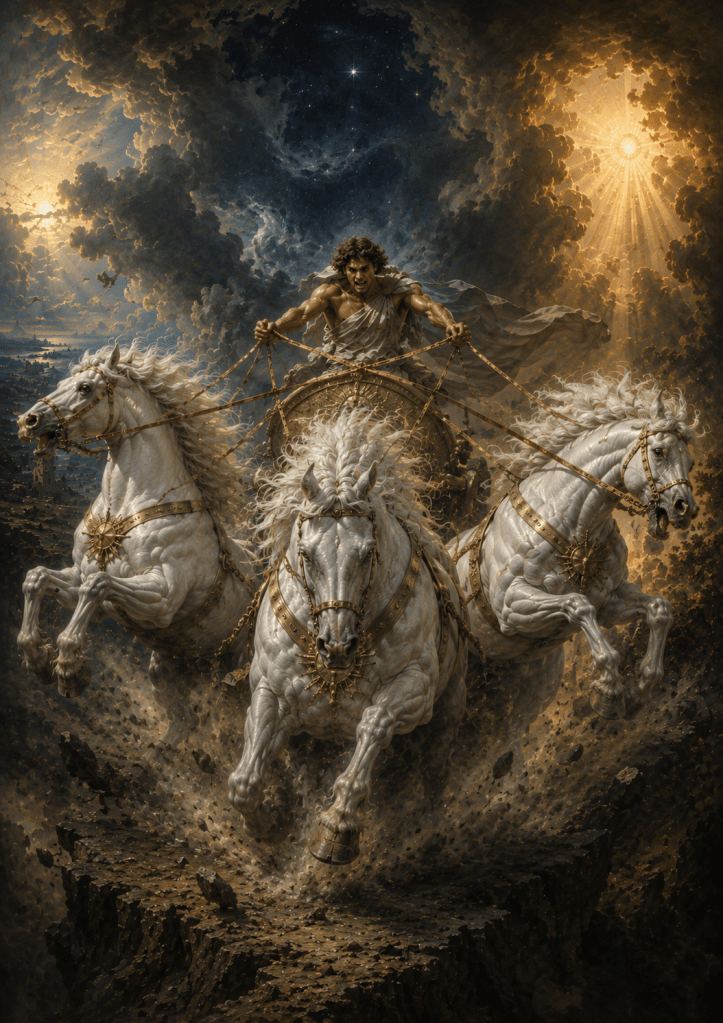
We cannot go so far as to accuse him of disloyalty; indeed, we are convinced that he can even attain a certain ideal of fidelity. But this fidelity is realized in an adventurous style—like that of knights-errant, loyal to the lord to whom they have sworn allegiance, or like troubadours who, in their wanderings, sing their love for the Lady of their heart. We owe to these elpidics our openings, conquests, innovative ideas, heroic impulses. The brevity of duration is compensated by intensity and by the immense value brought by the penetration not only into unknown territory, but also into the territory of non-being. The elpidic is perhaps the most courageous of the three characters, for he not only does not fear what does not exist, but illuminates through his intuitions what presents itself to all the others in a protective mist or enveloping darkness. His enthusiasm often approaches revolutionary fervor and would become such if his passion for novelty were sustained by an equal inclination toward faith. He imagines God as the One who is to come, as the One always awaited, as a Messiah never yet incarnate. The elpidic dimension of Judaism is evident, while Christianity, an eclectic religion, still preserves half of it, insofar as Jesus is placed equally in the past—birth, death, resurrection—and in the future: the Second Coming. The elpidic’s favorite feasts are inaugurations, opening ceremonies, prize-givings, launches, baptisms, births—New Year’s Eve, Christmas. He hates anniversaries and commemorations; evocations and homages bore him to death.
AI-generated image
The pistic character defines the faithful, but also the credulous, of this world. When faith is dominant, the other two virtues borrow its colors and orientation. A pistic respects tradition and received teachings; he is a person who excels in gratitude and admiration for what has been given to him. No expression suits anyone better than amor fati. He loves his destiny entirely: he believes that everything that happens to him, from birth to death, has a meaning, a purpose, a reason for being. He is the Stoic par excellence, though he can just as easily lapse into dogmatism and fanaticism. The pistic has total trust in the people around him, in those close to him, and in himself. His hope is that the present order may be perpetuated infinitely, that tomorrow may repeat today just as today repeated yesterday. As we have seen, his love is a love for what is here and now, a copy of what has been and a source of what will be. His good is perpetuity. He does not dream of other horizons; he does not want another life. Changes and novelties repel such a character so much that, to an elpidic, the life he leads might seem unbearably routine, obedient to the point of idiocy, content to the point of grotesqueness.
But we may also recognize him in the figure of Nietzsche’s aristocrat—admiring the grandeur of his past, full of gratitude and respect for his forebears, bearer of customs handed down from the dawn of time. The pistic has, one might say, an innate adherence to what is: to his environment, to his home, to his own people, to himself. Faith makes him immune to the most convincing arguments concerning the relativity of opinions, beliefs, and life situations. It is useless to ask a pistic about the salvation of the hundreds of millions of people outside his religion. Can God be so cruel as to condemn so many people simply because they did not have the good fortune to be born in the place of the true faith? He is scarcely interested. He simply lacks the capacity to understand such a problem. His agapic capacity does not reach that far; it does not perceive such alterity. Indeed, alterity itself is inaccessible to him. He conceives God as one “of his own”—“my God,” “our God”—and not as an absolute Other, as a Beyond, as a transcendence one can approach only insofar as one distances oneself from everything one knows, everything one has, everything one can think, as the agapic will do. The Book of Job renders, in many respects and almost to the end, such a familiar attitude toward God, both in Job’s friends and in Job himself. Only at the end does Job feel, hearing His thunderous voice, the breath of His transcendence; until then, he had been partly quarrelling with Him as with a neighbor in the heavens.
It is a commonplace to say that, in the pistic, reason is entirely subordinated to faith, having no other role than that of justifying it, explaining its grounds, and persuading others. Credo ut intelligam! Believe in order to understand; do not understand in order to believe. He will not say, as people commonly do, “I will not believe until I see with my own eyes,” or “I must see in order to believe”; he will maintain the opposite: one must believe in order to see; one does not see until one believes. His favorite blessing is the one from the Gospel according to John (20:29), which he regards as the motto of his entire life: “Blessed are those who have not seen and yet have believed!” (μακάριοι οἱ μὴ ἰδόντες καὶ πιστεύσαντες; makárioi hoi mē idóntes kai pisteúsantes). Faith is his highest value, what he cherishes most; and when he loves, he is convinced that there is nothing more beautiful and more substantial than the mutual gift of fidelity. Oaths and covenants are what he adores in the rituals of betrothal and marriage; as for occupation, he will always prefer institutions in which faith and loyalty are fundamental. He will be a soldier or a priest, and in the happiest cases he will be both: a soldier of a spiritual order, a man of obedience, discipline, and fidelity.
It goes without saying that for such a character there is no greater sin, no more unforgivable fault, than betrayal. It is no accident that Dante, whom we may regard as an illustrious exponent of the pistic character, places traitors in the last circle of Hell, in the ice of Lake Cocytus. Dante approaches the ideal type of the pistic insofar as his love for Beatrice becomes less a simple erotic story and more a device of pistic transfiguration, a pretext for divinizing her and turning her into the radiant object of an ardent, frankly religious faith. For Dante, Beatrice is image, icon, the object of an irrepressible need for adoration. The pistic wants to find a substitute or a face of God; he cannot live unless he has someone or something to divinize: a person, an idea, a country, a doctrine—with the clarification that these have nothing exotic about them, belonging as they do to his familiar, received, inherited horizon, unlike the elpidic who, insofar as he believes in something, projects the object of his faith into a temporal or spatial distance, more or less tangible. In exile, Dante will lament his native Florence, considering it the ideal homeland, for in the pistic the ideal and the real coincide. His idealizing relation to what already exists makes the objects and things around him acquire an aura invisible to others.
The pistic absolutizes—in black and white. He moves in a universe of absolutely good and absolutely evil beings; the world is divided into the beneficent and the maleficent. The pistic pulls the edges of the objects and persons around him toward a transcendent zone, uniting the visible with the invisible, the everyday with the allegorical and the symbolic. But the reciprocal is no less true: the pistic needs, as he needs air, a material support for his faith, an objectification or an incarnation—whether in the human flesh of a God descended to earth, or in the stone of a temple or a statue. The pistic cannot accept the existence of an Absolute Spirit or of a purely abstract Idea in place of gods or God. It is no accident that all the religions of the world are stories with characters “in flesh and blood,” with events as “real” as possible. Tell a believer that his God exists, but that He is an Absolute Spirit, everywhere and nowhere, impossible to see or hear, unrevealed and incapable of revealing Himself either in history or, in general, to any human soul, in this world or the next. Better no God at all than such a God. Philosophers rarely arise from pistic characters, characters so attached to the concrete—as the bringing together of the spiritual and the material—that they will passionately uphold the existence of miracles, apparitions, visions. Likewise, the pistic will not believe in a “Platonic,” “ideal,” “distant” love, but in betrothal, marriage, domestic presence. The emblematic gestures of the pistic are kneeling, investiture, blessing. His favorite celebrations are anniversaries, commemorations, coronations. He hates carnivals, bacchanals, saturnalia.
Finally, the third character of the good, the agapic character (from ἀγάπη — agápē), is the one for whom the highest value, the one governing his actions and his entire personality, coloring the other virtues in the tones of the dominant affect and orienting them in its direction, is love in the broadest sense of the term: from love of humankind (philanthropy) to love of God, from paideic love in both senses—from master to disciple and from disciple to master—to sexual love, from parental love to filial love. As the motto of his life one might place Saint Paul’s sentence from the famous Epistle to the Corinthians: “If I have not love, I am nothing.” The agapic is the eternal lover, but above all the one who associates eternalization with love. For the agapic, love has therapeutic, thaumaturgical, soteriological virtues. It explains everything, from the creation of the world—divinity creates out of love—to the physical order of nature. Empedocles’ love and strife, Φιλότης / Philótēs and Νεῖκος / Neîkos, are the principles that set the elements in motion, making them combine, join together, separate, and dissociate, thus constituting the whole universe.
Did I say hatred? Yes, but hatred, the complementary principle of love, is nevertheless secondary and seconded by it; it is an agapic hatred, a loving hatred, insofar as union implies separation and choice implies exclusion. Whoever loves much hates much, and often more than he loves. Agapics always attract the label of passionate people, people of pathos, capable of killing anyone who stands in the way of their love and, alas, sometimes even the beloved. A declaration of love always has, written on its reverse side, a declaration of war: a war against the whole world. From a social point of view, love is an anomaly, since lovers long, originally and fundamentally, for a place of their own, withdrawn as much as possible from the interferences of public space. The question is why the agapic hates society so much, even when the object of his love is humankind itself or God. The only answer that can be given is that he hates it because love is founded on an essentially individual relation, of the I–Thou type, whereas society is not.
On the contrary, for society to function, each of its members must wear a mask, must identify with a role and a status—which are by definition general and collective. In society no one is irreplaceable, since everyone plays a role, a role played by hundreds of millions of others. In love the masks fall, and the person (from persona—mask) becomes again an in-divid, an individual, that is, in-divisible, unique and unrepeatable, he and only he, an absolute singularity, a concrete universal. Love alone reveals the individual to us as an absolute, incomparable and irreducible, as an Idea, as a species with a single specimen, as a monad. Even when the agapic loves his “fellow human beings,” he does so in the same particular, hypostatic way, not as a multitude, for a multitude cannot be loved. It is said of great saints that they have an intuition of the inner life of the one who seeks them, that they possess a kind of clairvoyance which enables them to “see” immediately who stands before them, with all his past and future. Who knows whether, in his moments of ecstasy, such a saint does not have a complete perspective on all the monads suffering in this world, an infinitely encompassing experience of each soul in particular? In any case, such a power of simultaneously contemplating all His creatures in the unique individuality of each one has been attributed to God. This is a vision preeminently parental, for only a parent knows each offspring, however many children he may have. A parent mourns a child who died young even decades after losing him, regardless of how many other children he may have had in the meantime. For love alone can live, to the end and forever, the uniqueness of an individual—clothed in festive garments during life and in the shirt of Nessus after death.
Even the agapic’s self-love aims at the same uniqueness of his own individuality, to whose discovery and manifestation his hope and faith are linked. The agapic’s project of the self seeks to obtain that revealing agent capable of immortalizing the image of his unique soul. When the agapic manifests himself pedagogically, nothing makes him happier than placing the disciple in his own light, setting him on the road that only he can travel. Unlike the pistic—who believes in the God of a tradition or of a community—the agapic believes in a God of his own, a God who reveals Himself to him through a bond or manner that is eminently amorous. We know the quasi-erotic descriptions of mystical ecstasies. And just as the mystic, however much he may wish not to depart from the authority of the Church, is, by the very nature of his agapic vocation, incompatible with the frameworks of an institution—social, founded on role-playing and ritual scripts—so too, in secular life, the passionate agapic may find the idea of marriage repugnant, accepting it only accidentally and against his own will. He detests marriage because it is the perfect framework for the extinction of passion, by the mere fact of having been instituted by society; and for the agapic nothing is more tragic, more unacceptable, more unforgivable than the disappearance of love.
If for the elpidic discouragement, despair, is the supreme sin, and if for the pistic betrayal is the lowest step of degradation, for the agapic it is indifference: affective coldness, impassibility, indolence. No, hatred is not what the agapic hates most; on the contrary, we have seen that hatred makes a good household with love. What he hates most is the one deprived of love, the “lukewarm” one, the uninvolved one, the “frigid” and detached one, the phlegmatic and impermeable one. An agapic viscerally rejects Plotinus’ emanationist conception, according to which existence derives from the overfullness of an impersonal principle—and it is no accident that Neoplatonism is shattered by Christianity. Nevertheless, agapics, unlike pistics and much closer to elpidics, have an extremely important commerce with transcendence, with alterity—both that of the divine person and that of the human person. The agapic fully lives that “I know not what,” that ineffable, irrational, uncontainable element that is revealed to him in the person of the other—God or human being—in the relation of love.
For him, the body, the image, the flesh, the material are nothing but symbols, allegories or, at most, manifestations of the absolutely unique essence of the beloved, whether God or human being. Just as he sees in an icon a window toward the Absolute, in the body of the beloved the agapic sees a window toward his own absolute—irreducible to any of its parts, material or immaterial. The beloved manifests himself through what he says or does, through what he presents to sight, touch, smell, or hearing; but he is beyond all these, infinitely more than all of them taken together. In his case, the whole is infinitely more than the sum of its parts. This is why the agapic will express his love of God apophatically and his love of human beings poetically—poetically even when he writes prose. He hates rituals, repetitions, scripts. He wants every moment to be an event. He has a perfect historical sense; he is attentive to the details that individualize what he encounters; he wants to turn each day into a unique moment, not like the elpidic, by leaving home in search of the adventure of his life, but through heightened attention, through maximum vigilance toward what is happening around him. He is an avid consumer of journals and memoirs; he himself keeps journals in which he tries to preserve the kairotic essence of time. He literally lives each day as if it were the last, each instant as a unique occasion. A tireless hermeneut, he sees in every occurrence a sign, in every encounter a possible revelation, in every change of atmosphere a highly plausible opening of the heavens.
It is natural that this should be so, since he believes that the entire universe addresses him and since he aspires to attain a monadic vision, a science of the individual. His favorite celebrations are ad hoc ones, through which destructive time is converted into creative time, so that an ordinary moment, destined for disappearance and oblivion, is saved by the extraordinary induced spontaneously by its very celebration. Preferred occupations: writer, visual artist, photographer, historian. Yet this moral disposition has its sins. The agapic finds it difficult to bear relations that are impersonal by nature, where people are obliged to interact by virtue of social roles; for precisely this reason he falls into the opposite extreme: he becomes conflictual and rebellious, eccentric, extravagant. The agapic who does not manage to attain the ideal of love for humankind easily falls into misanthropy. Hatred succeeds—no less than love, though negatively—in revealing the uniqueness, the singularity of a person; and misanthropy is not a collective hatred, but an intraocular lens that magnifies to the point of caricature, accentuates to the point of hideousness, the particular traits of the individuals who cross one’s path. “Enormous sight and monstrous feeling”—Caragiale’s expression—is the strongest formula for misanthropy, situated on the opposite slope from philanthropy on this mountain of the agapic character.
Likewise, the agapic cannot bear to do something exclusively out of duty, to conform to a rule, to respect a pattern. Everything he does must spring from inclination and passion; therefore, when confronted with the necessity of respecting fixed frameworks, he becomes recalcitrant and insubordinate. He can easily be won back if he is made to feel that what he does is unique and indispensable, and above all that he is appreciated, loved, admired by those around him. Narcissism is the final point of this irrepressible desire to be loved.
It will have become sufficiently clear from this text—perhaps too long for the ever-diminishing patience of today’s reader—that the good, far from being homogeneous, compact, and without fissure, is in fact heterogeneous, fragmented, plural; that this multiplicity generates an inner tension that makes the good dynamic and allows it to manifest itself. The species of the good, following almost a law of nature, enter into conflict with one another, struggle and devour one another. Just as the world of life sustains and autogenerates itself through a bellum omnium contra omnes, through a war of secession, through an internal division, perhaps the same happens in the moral world, where, in order to ek-sist, the good divides itself into rival, competing species. The struggle between good and evil is a mythological image meant to reassure us. In fact, the good struggles—today and always—with the good, and the three theological virtues have been able to offer us a precious example in this regard. How many times, in grand history, have agapics fought against elpidics or pistics? How many times have pistics allied themselves with agapics against elpidics? And so on. Might the Fall itself not be read as a tension between species of the Good—faith and hope? peace and knowledge? communion and individuality?—rather than as a simple confrontation between good and evil?
But the most terrible thing is not the intestine struggle of the good when it manifests itself between peoples, ideologies, or individuals. What is terrifying is that this struggle takes place within ourselves, in each of us, as a struggle among our virtues. One of them will prevail, shaping, as we have seen, our character and our style, without the voices of the others having been silenced forever. Often they suddenly awaken, calling us, demanding us, wanting… our good. And the struggle begins again: the struggle between good and good, the struggle among virtues, aretomachy. It has been said that the road to hell is paved with good intentions. Our inner hell is inhabited by the greatest virtues.
How to cite this article
Horia Vicențiu Pătrașcu, “The Characters of the Good: Aretomachy, or the Struggle of the Virtues,” in Anthropos. Journal of Philosophy, Arts and Humanities, no. 4/2026.
This article is protected by copyright law; any full or partial reproduction or republication without acknowledgment of the source is strictly prohibited.


 ANTHROPOS. REVISTA DE FILOSOFIE, ARTE ȘI UMANIOARE