Mat Messerschmidt
On Beauty
In 1999, literary critic Elaine Scarry complained in her book On Beauty and Being Just of the “banishing of beauty from the humanities in the last two decades.”[1] A quarter-century later, it seems fair to say that more has stayed the same than has changed when it comes to the status of beauty. More than one reason is given for the distrust of the beautiful. The appreciation of beauty has long been associated with naivete, but naivete is regarded as a more clearly and purely bad thing than it once was. If I naively stand in wonder when faced with the beautiful, this naïve wonder is not a state that allows for clear-headed critical thinking. In my uncritical state, insidious powers can use beauty to manipulate me, using my captivation to bend me to their will. This is dangerous for anyone, but especially for an intellectual, if it is an intellectual’s job to question the world, to question the state of things: wonderment at beauty is an immersion in appearances, not a questioning of appearances. Beauty, or the languid acceptance of the beautiful as beautiful, is thus seen as the enemy of the kind of subversive questioning stance that could ever move us toward positive social change.
But, a further argument against beauty asserts, I can also become a bad actor myself in my enjoyment of beauty. Since we are taken by beauty and take pleasure in beauty, we can, intentionally or inadvertently, coercively turn the beautiful object of our attention into what we want it to be by mentally reducingit to its sensuous beauty. The criticism of such coercion can take the form, for instance, of a feminist concern regarding the “male gaze” as it encounters female beauty. Literary critics have seen this dynamic in William Wordsworth’s 1807 “The Solitary Reaper,” the entirety of which follows here:
The Solitary Reaper

Behold her, single in the field,
Yon solitary Highland Lass!
Reaping and singing by herself;
Stop here, or gently pass!
Alone she cuts and binds the grain,
And sings a melancholy strain;
O listen! for the Vale profound
Is overflowing with the sound.

No Nightingale did ever chaunt
More welcome notes to weary bands
Of travellers in some shady haunt,
Among Arabian sands:
A voice so thrilling ne'er was heard
In spring-time from the Cuckoo-bird,
Breaking the silence of the seas
Among the farthest Hebrides.

Will no one tell me what she sings?—
Perhaps the plaintive numbers flow
For old, unhappy, far-off things,
And battles long ago:
Or is it some more humble lay,
Familiar matter of to-day?
Some natural sorrow, loss, or pain,
That has been, and may be again?

Whate'er the theme, the Maiden sang
As if her song could have no ending;
I saw her singing at her work,
And o'er the sickle bending;—
I listened, motionless and still;
And, as I mounted up the hill,
The music in my heart I bore,
Long after it was heard no more.
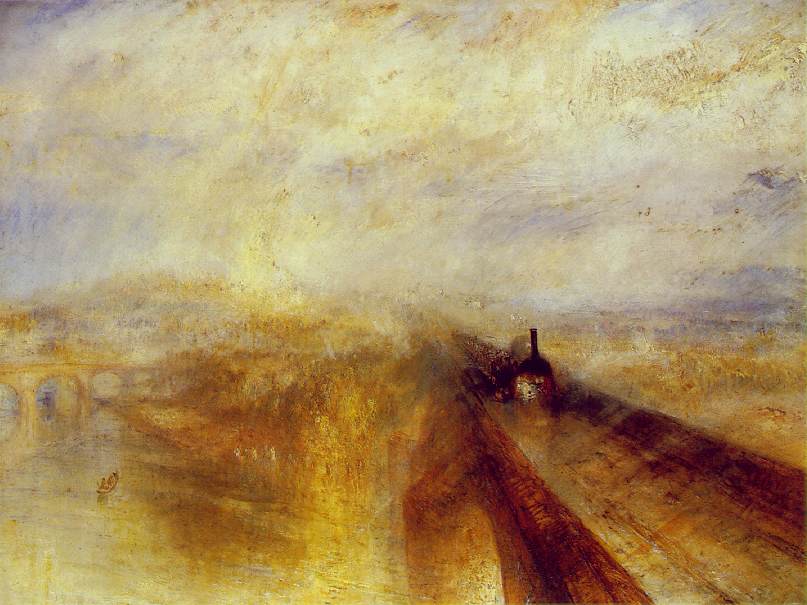
The Highland lass is singing in Scots Gaelic, so Wordsworth cannot understand her song. In his empowered position as a male, an Englander, and an educated person – so the argument goes – he can, and does, coercively impose his own chosen meaning onto the words of the lass, who is female, Scottish, and a peasant.[2] Wordsworth effectively renders her mute, stealing her voice from her, turning her into a merebeautiful object, a blank siphon to be infused with whatever meaning he so chooses.
So we have seen two different ways in which beauty has been said to be insidious: when I encounter beauty, the experience can either 1) allow someone else to manipulate me as I am dazzled, rendering me uncritically accepting of whatever injustice lies before me, or 2) it can offer me an opportunity to manipulatively reduce whatever or whomever it is I am looking at to a mere object. These are roughly the arguments against beauty recounted by Scarry.
Yet, against the argument that beauty renders us uncritical, we can say the following: the beautiful can also arrest our attention so as to make us appreciate what we do not want to appreciate. Our response to the beautiful can forcible violate our ideologized sense of what it is we are supposed to appreciate. The beautiful can be, in this way, paradoxically subversive. In art, for instance, war can appear as beautiful to a committed dove. Beautiful human bodies can cause trouble for our conscious convictions, when eros violates those convictions. A beautiful gender-bending body might disrupt the comfort and convictions of a gender traditionalist; a feminist man’s fascination with a beautiful blonde, buxom, traditionally feminine body might undermine his sloganized opinions about what physical beauty standards ought (not) to be. In other words, the naivete of beauty, its resistance to rational argumentation, allows it to circumvent the out-of-hand, prefabricated rejections that our rational minds might prepare. Beauty can be subversive, then, in its own way, precisely because of its naivete – subversive of the prejudices of our rational minds.
Yet must the final judgment on beauty come down to whether it is “subversive,” as if the only value it could have for us would necessarily lie in disruption? Perhaps beauty ought to be celebrated, as Plato, Heidegger, and Romantic nature poets all seem to have believed, for its ability to bring us back to something we have always had, in some sense, but also have lost, in another sense. Perhaps beauty does not transform us or subvert established orders so much as it restores us, arresting us in a way that encourages the inessential to fall from view and allowing that which is essential but forgotten to re-emerge. But what is it that we rediscover in the experience of beauty, what is it that re-emerges? Is it the immortality of the soul, as in Plato, or Being, as in Heidegger, or the heart of nature, as Wordsworth appears to believe, or our animal selves as will to power, as Nietzsche claims of beauty? And if the conviction that beauty initiates an all-important recoveryrecurs so frequently and strongly, then why are our answers as to what exactly is recovered in the experience of beauty so varied?
I would like to return to Wordsworth’s poem to attempt the barest beginning of an answer to these questions. My problem with the critical attack on Wordsworth’s “Solitary Reaper,” which I summarized above, is that Wordsworth in fact gives every indication he could possibly give that he cannot translate the song – that the words of his poem do not give us the essence of the girl’s song. He in fact does not coercively decide for her what her song means, but affirms that only she holds the secret. Faced with the beautiful, the traveler acknowledges that what commands his attention is beyond his comprehension. He tells us explicitly what his words cannot do in the face of the beautiful – yet the beautiful has changed and expanded his consciousness, in spite of his lack of comprehension. It is beauty that forcibly grips Wordsworth, and not the other way around. Its revolutionary, restorative power does not depend on λόγος but exceeds it.
To what is Wordsworth brought “back,” far from home in Scotland, in the experience of beauty? Is it nature (everything depends on the fact that this is a natural scene) or Being (as the song exceeds infinite time and infinite space) or the self (his final reflection is on the changed state of his own heart)? Perhaps those “things” to which beauty has been said to bring us back– the self, nature, Being – can only be discovered or rediscovered if they are encountered as a constellation, in relation to one another. If this is right, the anamnetic power of beauty could appear as conservative in that it recovers these primordial relations, or as revolutionary to the extent that it casts off the trappings of the quotidian world that has come to be “too much with us,” to quote Wordsworth’s 1802 sonnet – the world not permeated by beauty.
[1] Elaine Scarry, On Beauty and Being Just. Princeton University Press: Princeton 1999, 57.
[2] This is the gist of the concern of Marjorie Levinson, Keats’s Life of Allegory. Blackwell. Oxford: 1988, 79.
INDICAȚII DE CITARE
Mat Messerschmidt ,,On Beauty’’ în Anthropos. Revista de filosofie, arte și umanioare nr. 12 / 2025
Acest articol este protejat de legea drepturilor de autor; orice reproducere / preluare integrală sau parțială, fără indicarea sursei, este strict interzisă.


 ANTHROPOS. REVISTA DE FILOSOFIE, ARTE ȘI UMANIOARE
