
The Thanatos Particle. A Neural Theory of Death
Although the fundamental characteristics of a living cell are its internal organization, metabolism, its ability to reproduce by division and its ability to transmit genetic information, there are cells in complex organisms that no longer perform two of these essential functions. The adult brain and spinal neurons no longer divide or transmit their genetic code. Doesn’t this absence of vital functions make them perfect candidates for the category of „dead cells”?
The main factor of mortality seems to be precisely the occurrence in the living world of this new organizational system. Indeed, we notice that organisms not endowed with a neuronal system are theoretically capable of prolonging their existence indefinitely. But even among the living systems endowed with neurons, there is a difference between those that exhibit neurogenesis, respectively neuroregenerability, and those lacking such capacities. In the case of the first category, a negative senescence was recorded, a longevity which – in the absence of risk factors and predators – remains, theoretically, indefinable. There is even a correlation between the limit of division of somatic cells (the Hayflick limit) and the presence of neurogenesis / neuroregenerability.
More precisely, in the case of organisms that exhibit neuroregenerability and/or neurogenesis – even the somatic cells have a much higher division capacity than the organisms which do not exhibit neuroregenerability and/or neurogenesis. The Greenland shark or the turtles, to provide just two examples, exhibit neuronal regenerability and, therefore, an enormous longevity, with the Greenland shark reaching an estimated age of 500 years. Similarly, the crocodiles and the reptiles exhibit such neuronal regenerability, and the jellyfish can completely regenerate their organisms – relying precisely on such neuronal regenerability. The most astonishing example is provided by the jellyfish Turritopsis dohrnii which is practically immortal, as it manages to fully rejuvenate.[1]
Recent studies have shown that the inoculation of stem neurons into mice also produced positive effects on their longevity. Given that a complex organism benefits not only from a nervous system but that this system innervates the entire body – one can deduce that the main factor in aging is the handicap of the adult nerve cell, i.e. its lack of regenerability and, obviously, the absence of neurogenesis.
Paradoxically, the neurons that make possible the emergence of the consciousness, the soul and the spirit at some point prove to be the true „mortal” part of the body, while its immortal part is made up precisely of somatic cells – endowed with the ability to reproduce through division and transmit genetic information. The disadvantages of such a „symbiosis” are obvious: the more complex the organism, the more pronounced the mortality is precisely because in such organisms the nervous system tends to expand and, above all, to stabilize, to limit the neuronal regenerability and the neurogenesis to the point of their cancellation.
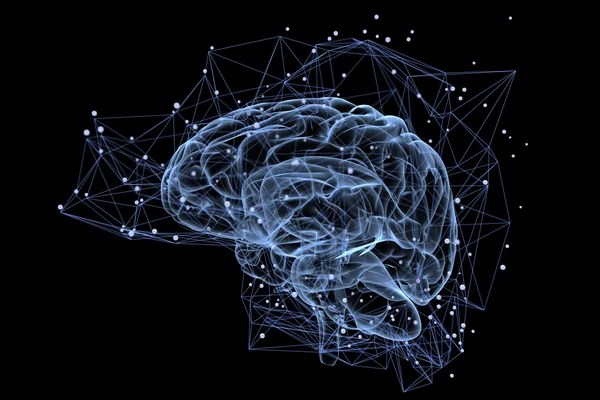
The complex organism seems to be fundamentally impacted by the neuronal degeneration (the cause of which is the neuronal stability – the lack of regeneration and neurogenesis) and it is precisely this condition that could be considered responsible for the aging of the entire organism and, ultimately, of its death.
It is very likely that at the beginning of the evolution of these living systems (neuronally organized systems), they preserved the two characteristics of other cells (reproduction by division and transmission of genetic information), a fact that we can see in jellyfish, some reptiles and fish, sharks, but also in some octopuses (they are programmed to die for completely different biological reasons – the enormous consumption during the care of their young). The fact that the salamanders, the jellyfish, the octopuses and some reptiles can regenerate parts of their body (tentacles, tails, eyes, parts of the brain and so on) is clearly due to the preservation of their neuroregenerability and their neurogenesis.
At some point during the evolution of life on the planet, with the emergence of higher mammals, the neurons lose this regenerative capacity – or it is greatly reduced – and this deficiency translates into a collapse in longevity. However, as the ontogenesis restores the phylogenesis – according to some authors, the neurogenesis is present during the childhood and the adolescence, gradually reducing during the adulthood to be preserved only in the hippocampus and the olfactory bulb.[2]
The question that now arises is what would the underlying „advantage” of such a loss might be. Why was such a mutation preserved – so obviously disastrous in terms of biological longevity? Why did the living organisms equipped with „static”, non-generative neural systems maintain and even thrive, resulting in such a dramatic loss of longevity? The answer could be this: what we call higher animals are the animals endowed with an enormous capacity for learning, information storage and memorization.
These capacities, however, require a stable neuronal base, „fixed” neurons that can form „epistemic” pathways, that can strengthen their connections and form networks with other neurons. The loss of the regenerability was compensated by the huge number of „stable”, fixed adult neurons and by their ability to represent the external world to a degree that no animal endowed with regenerative neurons/neurogenesis could have. Although the information is not stored in neurons per se but we owe it to synapses and the neuronal connections, it is very likely that the neuronal stability is an extremely important factor in the formation of long-term memory, reflective consciousness and identity.[3]
Therefore, in order to have an epistemic basis, a mirror of the world, a stable support is needed, that is, neurons whose regeneration capacity is deactivated. If neurons were to regenerate continuously, such a basis would not be possible – the connections so necessary for learning – would be lost along with the generation of new neurons. It is highly interesting that in those areas of the adult human brain where the still neurogenesis still occurs (in the hippocampus and in the olfactory bulb) the most formidable phenomena of “memory loss” also occurs. For instance, the hippocampus is involved in the formation and perception of emotions, the neurogeneration could provide part of the answer to the question of why we forget (sometimes even very quickly) the emotions and the feelings that form the center of certain eras of our lives. Also, the explanation for why smells are so difficult to be voluntarily recalled, as they remain permanently dependent on the stimulus, may be the presence of the neurogeneration in the olfactory bulb.
The neural theory of death is much more comprehensive than the sexual reproduction theory of death (developed by Freud). For Freud, death occurs with the sexual reproduction, but the example of the jellyfish Turritopsis dohrnii – an immortal sexual animal – refutes this theory. The sexual reproduction can possibly be considered an adjuvant, a compensation for the loss of the capacity for cell division – all the more pronounced as we relate to more complex, neuronally organized animals. A neuronal organization involves the inhibition of regeneration in order to ensure the stability necessary for the conscious representation of the world, the learning and the memory.
[1] Certainly, the longevity is relative – for some animals with neuronal regeneration, a lifespan of 20-30 years, which seems short to us, stands for an enormous feat considering the environments in which they live and the risk factors they are subjected to.
[2] According to some authors, the neuronal cells that form the neocortex are prenatal and have the same age as the individual.
[3] R.S. Nowakowski, Stable neuron numbers from cradle to grave, Proc. Natl. Acad. Sci. U.S.A. 103 (33) 12219-12220, https://doi.org/10.1073/pnas.0605605103 (2006).
HOW TO CITE
Horia Vicențiu Pătrașcu, „The Thanatos Particle. A Neural Theory of Deathi” in Anthropos. Revista de filosofie, arte și umanioare nr. 10/2025
This article is protected under copyright law. Any reproduction or redistribution, in whole or in part, without proper attribution to the source, is strictly prohibited.


 ANTHROPOS. REVISTA DE FILOSOFIE, ARTE ȘI UMANIOARE